Disclosure: Top Local Diner is reader-supported. When you buy through links on our site, we may earn an affiliate commission. Learn more.
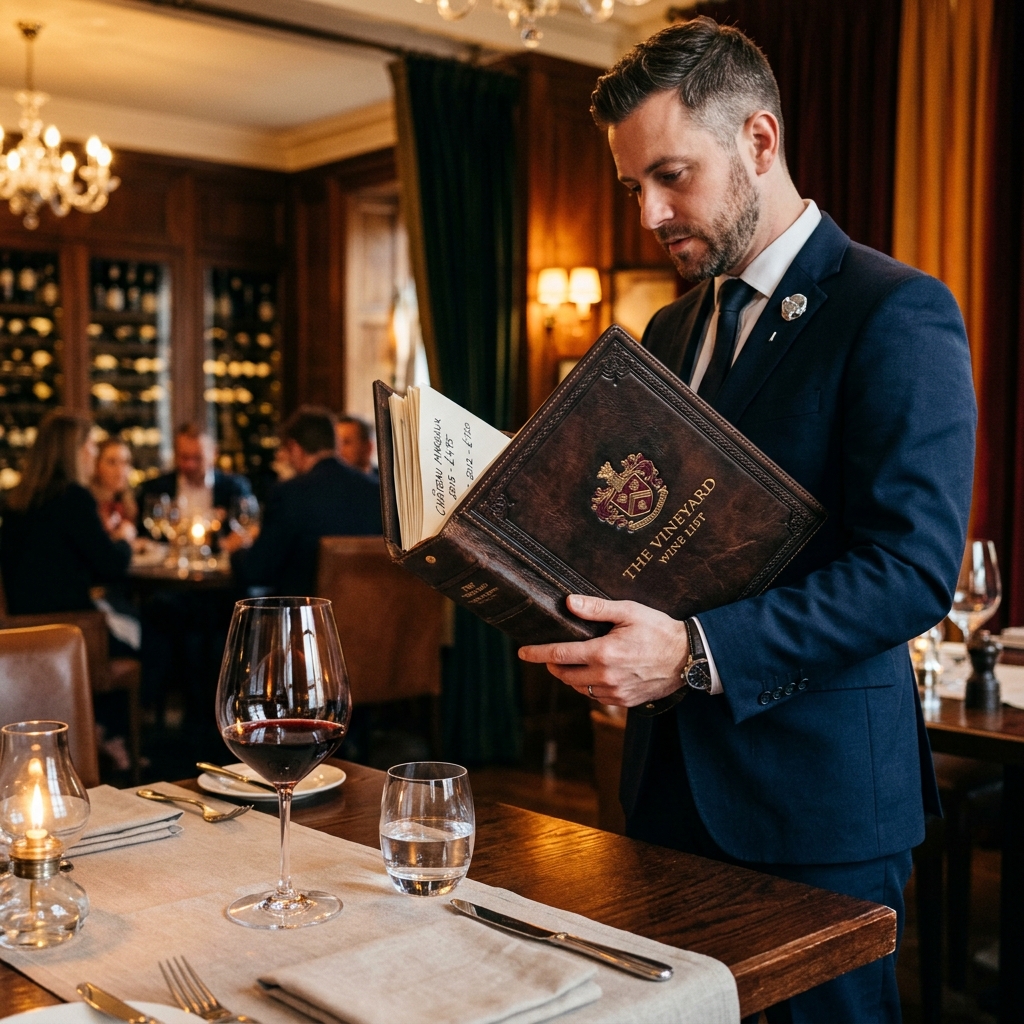
I will never forget the first time I sat down at a high end steakhouse for a business dinner. The sommelier handed me a wine list that weighed more than my laptop. I opened it and felt my palms start to sweat. There were hundreds of bottles, strange French names, and prices that made my eyes water. I panicked and pointed to the second cheapest bottle on the list. The sommelier raised an eyebrow and I knew immediately that I had made a rookie mistake. The best advice I ever received about ordering wine came from an old chef who told me to relax. He said wine is just grape juice that got a little fancy. The goal is not to prove how much you know. The goal is to enjoy your meal and your company.
The Second-Cheapest Bottle Trap
The second cheapest bottle on any wine list is often the one with the highest markup. Restaurant owners know that customers are too embarrassed to order the very cheapest option. So they price the next one up at a premium. If you want value, look for the wines that are listed by the glass. Those are often the ones the restaurant buys in larger quantities and they usually offer a better deal.
When you open a wine list, start by looking at the regions. France, Italy, Spain, and California are the heavy hitters. But do not ignore places like Argentina, Chile, or Portugal. These regions produce incredible wines at much friendlier prices. I discovered a Malbec from Argentina a few years ago that now makes a regular appearance at my dinner table. It cost me thirty five dollars and tasted like a bottle twice that price.
Vintages and Pairings
Understanding the difference between vintage and non vintage is helpful. Vintage wines come from a specific year. If it is a good year, the wine can be outstanding. But a bad year can produce a dud. Most restaurants focus on reliable vintages, so you do not need to overthink it unless you are looking at collectible bottles. Non vintage wines, especially Champagnes, blend multiple years to create a consistent house style. Those are often safe and enjoyable.
Pairing wine with food is simpler than most people make it sound. The old rule about white wine with fish and red wine with meat is a decent starting point, but it is not the law. What really matters is weight and intensity. A light fish like sole needs a light wine like a Sauvignon Blanc. A heavy grilled tuna can handle a Pinot Noir. For steak, I usually go with a Cabernet Sauvignon or a Zinfandel. The tannins in those reds cut through the fat and cleanse your palate.
Talking to the Sommelier
Do not be afraid to ask your sommelier for help. These people are not there to embarrass you. They are passionate about wine and they genuinely want you to enjoy your meal. When I finally let my guard down and started asking questions, I learned more in five minutes than I had in years of guessing. Tell them your price range, what you usually like, and what you are eating. They will almost always point you to something that fits.
One trick I learned from a sommelier in Chicago is to look at the wine list for the region that matches the cuisine. If you are eating Italian food, look for Italian wines. If you are eating French, look for French. The wines from those regions were made to complement their local dishes. It is not a guarantee of perfection, but it is a strong starting point.
Corkage Fees
Corkage fees are worth understanding too. If you have a special bottle at home that you want to bring to a restaurant, most places will let you open it for a fee. That fee can range from twenty to fifty dollars. Sometimes it is cheaper to pay the corkage than to buy a similar bottle off the list. Just call ahead and ask about their policy. Some restaurants do not allow outside wine at all.
Since I stopped treating wine lists like pop quizzes, I have actually started having fun with them. I still make mistakes sometimes, but now I just laugh and try something different next time.
About the Author
Sarah is a culinary historian who spends her time tracing the origins of classic American comfort food and diner culture.