Disclosure: Top Local Diner is reader-supported. When you buy through links on our site, we may earn an affiliate commission. Learn more.
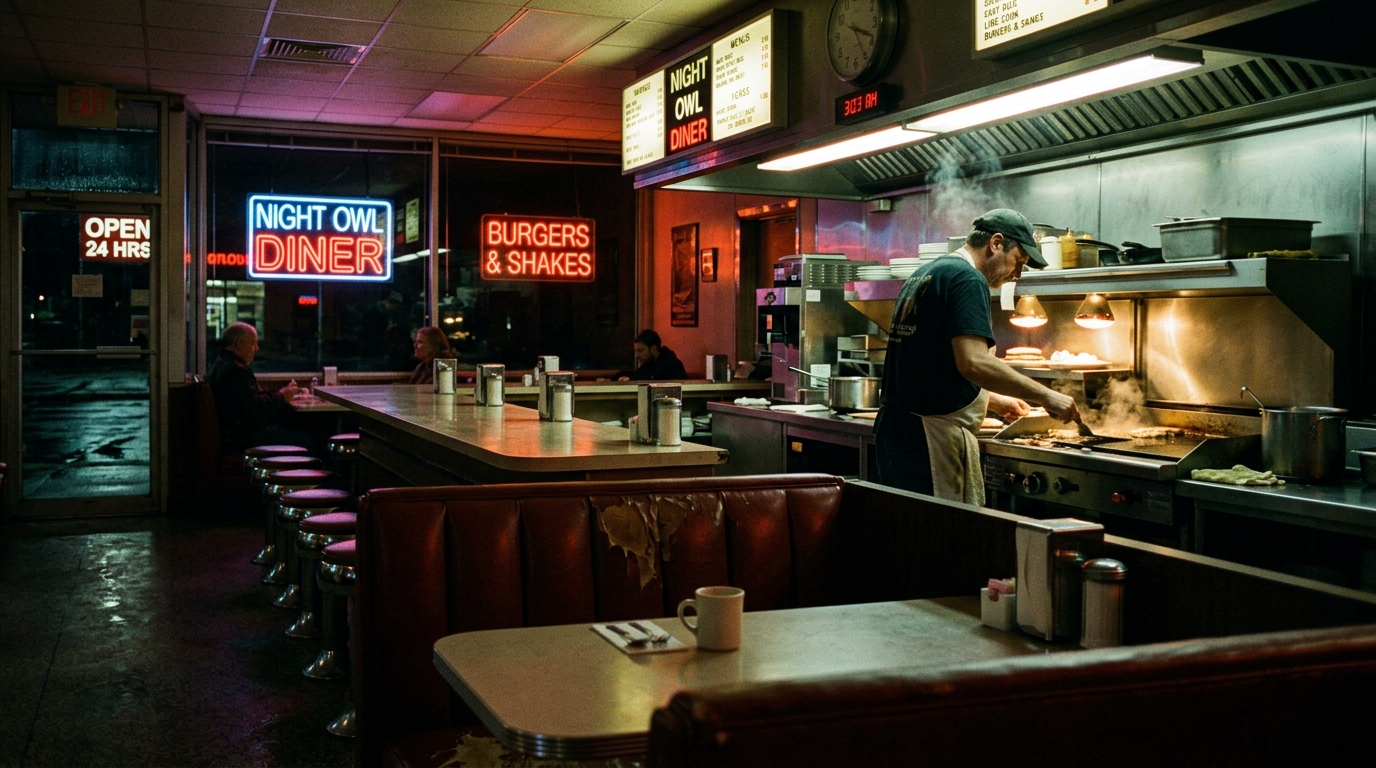
A few summers ago, I was driving through a small town in the Midwest and my stomach started growling. I saw a brightly lit place called 'Grandma's Country Kitchen' with a giant plywood pie out front and a man dressed as a farmer waving at cars. It looked charming, so I pulled in. The menu had forty seven items, the pancakes were rubbery, and the coffee tasted like dishwater. I paid twenty two dollars for a breakfast that would have disappointed me at a gas station. Later that day I mentioned my experience to a local at a hardware store. He laughed and pointed me to a place called 'Sal's' two blocks off the main road. There was no sign out front, just a painted window. The parking lot was full of pickup trucks and work vans. I walked in and found a cramped counter with stools worn smooth by decades of use. The waitress called me 'hon' and the eggs were perfect. That is when I learned the real difference between a trap and the real deal.
Visual Clues and Location
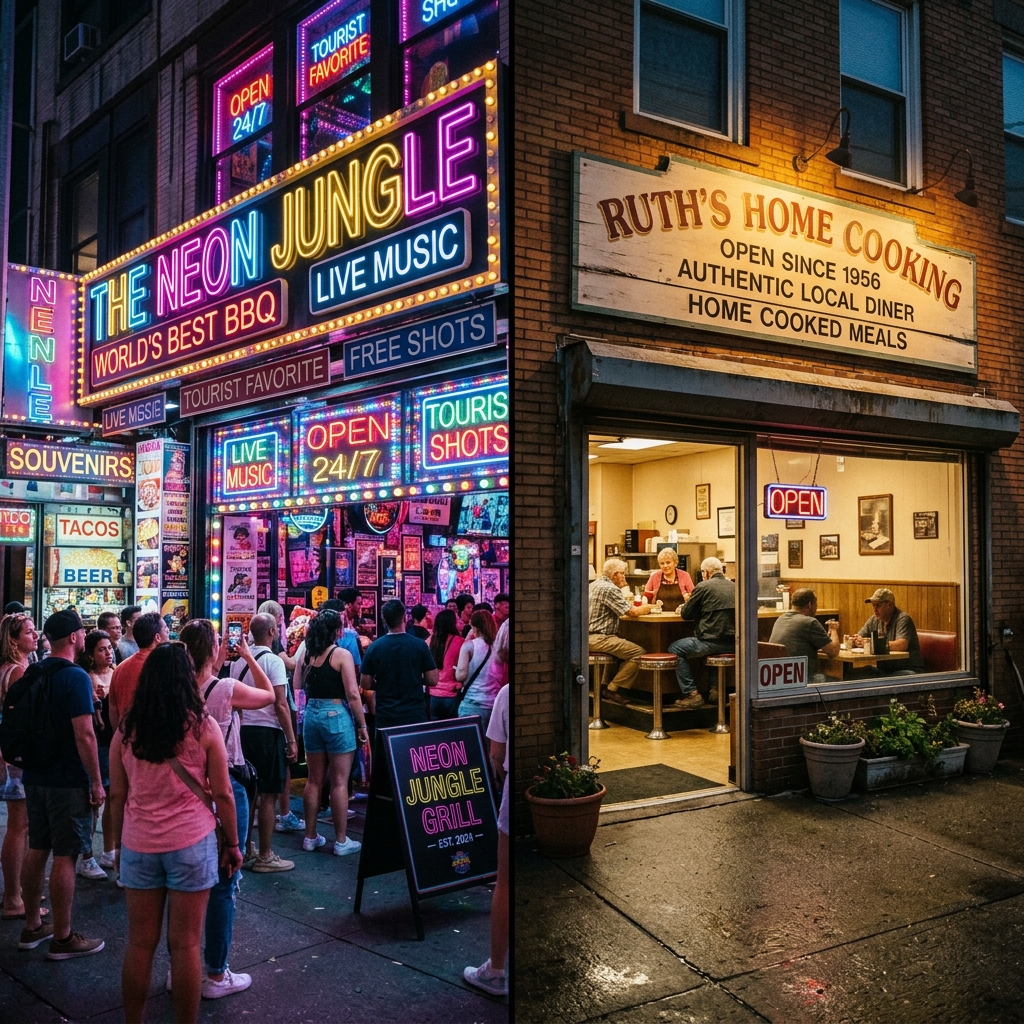
Tourist traps are designed to catch your eye from a distance. They have massive signs, cartoon characters, and brightly colored awnings. They are almost always located right next to a major highway exit or directly across from a popular landmark. Authentic diners are usually hiding. They sit on side streets or in older strip malls. You have to look for them, which is exactly why the locals like it that way.
The menu is your first clue. If a place has a menu with five pages of food, I get suspicious. A real diner does not have a Thai curry section next to a Mexican burrito next to a Philly cheesesteak. They specialize in a few things and they do those things incredibly well. Look for a menu that fits on one page or on a chalkboard. The best diners often have daily specials that change based on what the kitchen found fresh at the market that morning.
The Customers and Staff
Look at the customers. If the dining room is full of people with cameras, fanny packs, and maps, you have found a tourist trap. If you see workers in paint stained jeans, truck drivers, nurses from the nearby hospital, and older couples reading newspapers, you have hit the jackpot. Those locals know where the good food is because they eat there every week. I always look for the table where the off duty police officers are eating. Cops know the best breakfast spots in any town.
The staff is another giveaway. At a tourist trap, the servers are often seasonal workers who do not care about the food. They are just there for a summer job. At an authentic diner, the waitress has been there for fifteen years. She knows the regulars by name and she knows that Frank likes his eggs over easy with rye toast, not white. That kind of institutional knowledge does not come from a corporate training manual.
Pricing and Reviews
Pricing tells a story too. Tourist traps charge premium prices because they know you are not coming back. They do not need repeat business. A real diner keeps prices reasonable because their survival depends on the lunch crowd coming back every Tuesday. If a basic burger and fries costs eighteen dollars in a casual setting, you are probably in a trap. It should cost ten or twelve at most.
Check the online reviews but read them carefully. Tourist traps often have thousands of reviews with generic praise like 'great spot' and 'amazing service.' Authentic diners might have fewer reviews, but the ones they have are specific. People write about the homemade gravy, the crispy hash browns, or the pie that their grandmother used to make. Those details are hard to fake.
The Ultimate Test
The ultimate test is to ask a local. I have started doing this everywhere I travel. I walk into a gas station or a hardware store and I ask the person at the register where they eat lunch. They never point me to the place with the giant plywood pie. They always point me to the unassuming building with the worn out sign and the parking lot full of pickup trucks. That is where the soul of the town lives, and that is where I want to eat.
About the Author
Sarah is a culinary historian who spends her time tracing the origins of classic American comfort food and diner culture.