Disclosure: Top Local Diner is reader-supported. When you buy through links on our site, we may earn an affiliate commission. Learn more.
The late-night diner shift is a chaotic, beautiful symphony of sizzling hash browns, endless coffee pours, and perfectly flipped burgers. But this seemingly effortless 2 AM magic doesn't happen by accident. It requires meticulous preparation hours before the bars close.
Prepping the Line
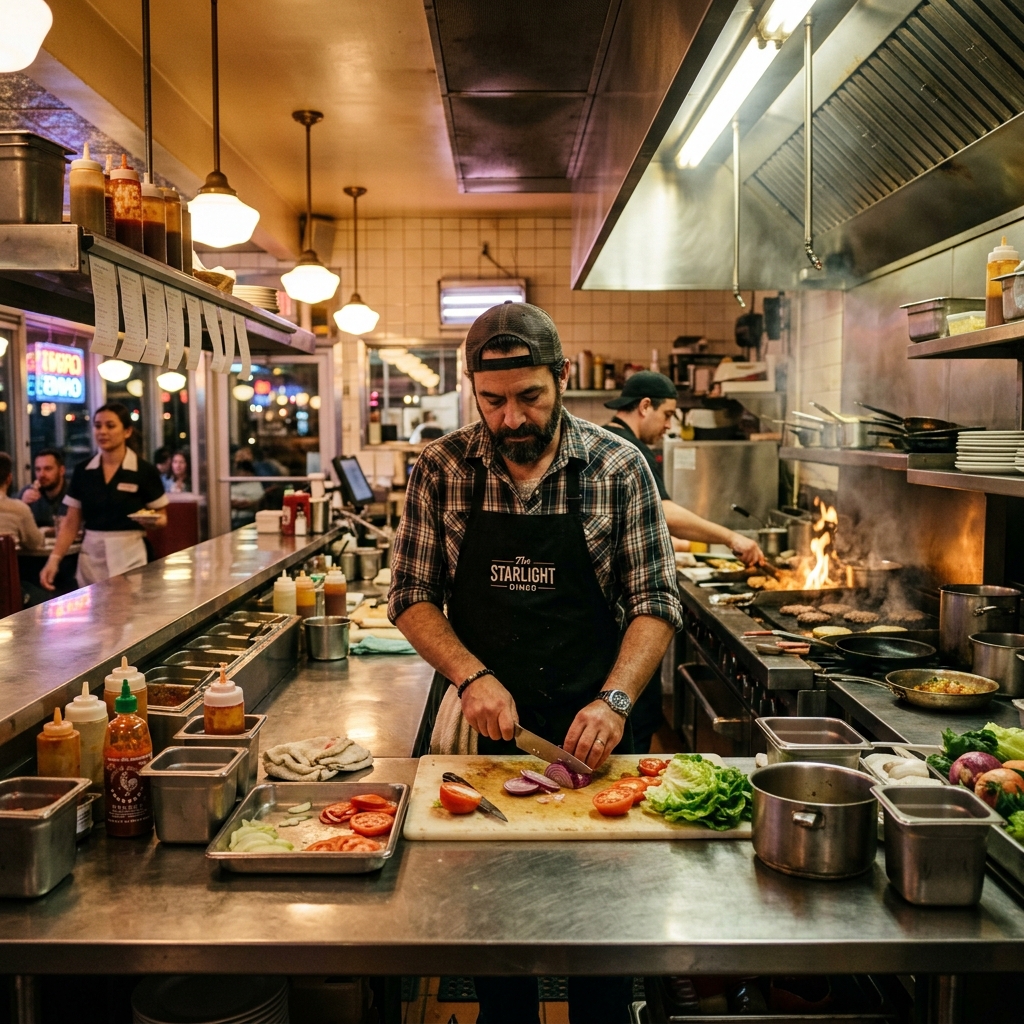
Before the midnight rush, the kitchen must be fully stocked. This means pre-slicing tomatoes, washing lettuce, and portioning out burger patties. The fry station is primed, and the griddle is scraped clean and re-oiled. Every second counts when a party of ten walks in at 2:30 AM.
The Importance of the 'Mise en Place'
A French term meaning 'everything in its place', the mise en place is critical. Condiments, garnishes, and backup supplies are brought to the front of the line. The coffee machines are cleaned, and fresh pots are brewed continuously. A well-organized station prevents the kitchen from collapsing under the weight of sudden rushes.
Managing the Griddle Real Estate
During a rush, the flat top griddle is prime real estate. The cook must mentally divide the surface into zones: one for raw meats, one for eggs (which require lower heat), and one for toasting buns and pancakes. Mastering this spatial puzzle is what separates a good diner cook from a great one.
About the Author
Sarah is a culinary historian who spends her time tracing the origins of classic American comfort food and diner culture.