
Classic Las Vegas Casino Prime Rib
Disclosure: Top Local Diner is reader-supported. When you buy through links on our site, we may earn an affiliate commission. Learn more.
Long before the era of celebrity-chef mega-restaurants and Michelin-starred tasting menus, the undisputed culinary king of Las Vegas was the casino prime rib dinner. Introduced in the 1950s as a luxurious 'loss leader' designed exclusively to lure gamblers off the blistering desert streets and into the dimly lit, air-conditioned casinos, this meal became an instant icon of American excess and hospitality.
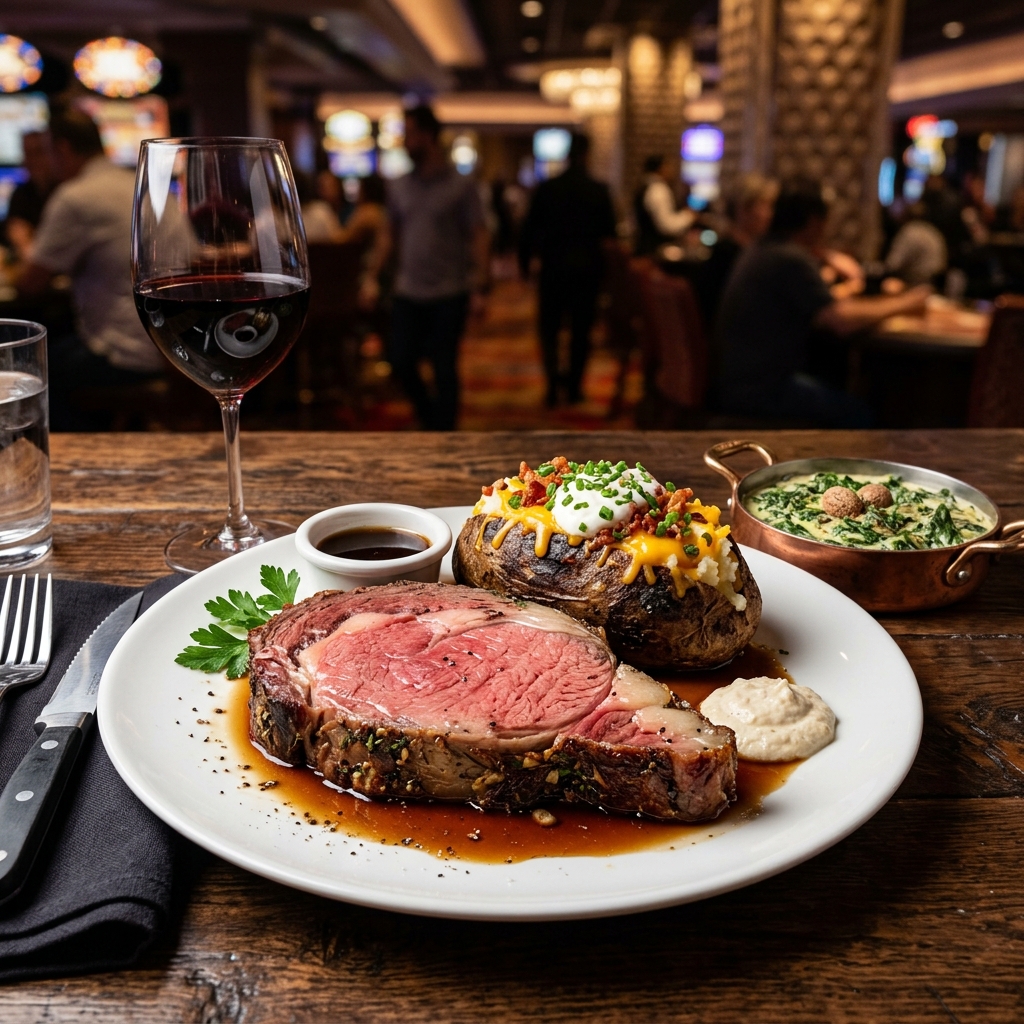
The classic Vegas prime rib is a masterful exercise in slow-roasting a massive, incredibly expensive cut of beef to absolute perfection. Unlike a seared steak, prime rib demands patience. The massive standing rib roast is heavily encrusted with coarse salt, crushed black peppercorns, and pungent garlic, then roasted at a remarkably low temperature for hours. This agonizingly slow process ensures edge-to-edge pink perfection, slowly melting the internal marbling into the meat to create an unimaginably tender, buttery texture.
Served tableside from a gleaming silver cart, a thick slab of this majestic roast is traditionally accompanied by a sharp, sinus-clearing dollop of horseradish cream and a pool of deeply savory, unthickened beef au jus made directly from the pan drippings. Whether you're celebrating a massive jackpot or simply treating your family to a Sunday feast, mastering this classic Vegas prime rib will make you feel like the ultimate high roller in your own dining room.
Ingredients
- 1 standing rib roast (prime rib), bone-in, about 6 to 8 pounds (ask your butcher to 'french' the bones and tie it)
- 1/2 cup high-quality olive oil or softened butter
- 8 cloves garlic, minced into a paste
- 3 tablespoons coarse kosher salt
- 2 tablespoons freshly and coarsely cracked black pepper
- 1 tablespoon fresh rosemary, finely chopped
- 1 tablespoon fresh thyme, finely chopped
- 2 cups rich beef broth or stock (for the au jus)
- 1/2 cup robust red wine (for deglazing the pan)
- 1/2 cup sour cream (for the horseradish sauce)
- 1/4 cup prepared hot horseradish
- 1 tablespoon Dijon mustard
- 1 tablespoon fresh chives, finely chopped
Instructions
Crucial First Step: Remove the prime rib from the refrigerator at least 3 to 4 hours before you plan to cook it. A massive roast like this must come completely to room temperature before roasting, otherwise the outside will overcook while the center remains raw.
In a small mixing bowl, combine the olive oil (or softened butter), minced garlic paste, coarse kosher salt, coarsely cracked black pepper, chopped rosemary, and chopped thyme. Mix thoroughly to create a thick, highly aromatic herb paste.
Pat the entire surface of the prime rib completely dry with paper towels. Using your hands, aggressively massage the herb paste over every inch of the meat, pressing it firmly into the fat cap.
Preheat your oven to a very low 250°F (120°C). Place the seasoned prime rib, bone-side down, in a heavy-duty roasting pan. The ribs will act as a natural roasting rack, elevating the meat and allowing hot air to circulate underneath.
Insert an oven-safe meat thermometer into the exact center of the roast, ensuring it does not touch any bones or major pockets of fat. Roast the meat undisturbed until the internal temperature reaches exactly 120°F (49°C) for a perfect, edge-to-edge rare, or 125°F (52°C) for medium-rare. This slow roasting process will take approximately 2.5 to 3.5 hours depending on the exact size of your roast.
Once the target temperature is reached, carefully remove the roast from the oven. Transfer it to a large cutting board and tent it very loosely with aluminum foil. Let the meat rest for a mandatory 45 minutes to 1 hour. This allows the juices to redistribute. The internal temperature will rise another 10 degrees due to carryover cooking.
While the meat rests, prepare the horseradish cream by whisking together the sour cream, prepared hot horseradish, Dijon mustard, and fresh chives in a small bowl. Refrigerate until ready to serve.
To make the au jus, place the roasting pan with all the beef drippings directly onto your stovetop over medium-high heat. Pour in the red wine to deglaze the pan, using a wooden spoon to vigorously scrape up all the highly flavorful browned bits stuck to the bottom.
Add the beef broth to the pan and bring the liquid to a rapid boil. Reduce the heat and let it simmer vigorously for 10 minutes until slightly reduced and intensely flavorful. Strain the au jus through a fine-mesh sieve into a warm serving pitcher.
Just before serving, crank your oven up to 500°F (260°C). Place the rested roast back into the blistering hot oven for exactly 8 to 10 minutes to sear the outside and create a dark, crispy, sizzling crust. Watch it carefully so it does not burn.
Remove from the oven, immediately carve the roast into thick, generous slabs, and serve alongside the hot au jus and cold horseradish cream.
Chef's Pro Tips
The Reverse Sear is Non-Negotiable
Cooking the meat at a low temperature first (the reverse sear) guarantees edge-to-edge pink meat without the dreaded gray band around the edges. Searing it at 500°F at the very end ensures the crust is crispy right as it goes to the table.
Use a Digital Meat Thermometer
Do not attempt to cook a massive, expensive piece of prime rib using time calculations alone. Ovens vary wildly. A high-quality leave-in digital meat thermometer is the only way to guarantee perfectly cooked meat.
Resting is Cooking
If you slice the roast the moment it comes out of the oven, all the juices will violently flood out onto your cutting board, leaving the meat dry. Resting the meat for an hour allows those juices to thicken and redistribute back into the muscle fibers.