Disclosure: Top Local Diner is reader-supported. When you buy through links on our site, we may earn an affiliate commission. Learn more.
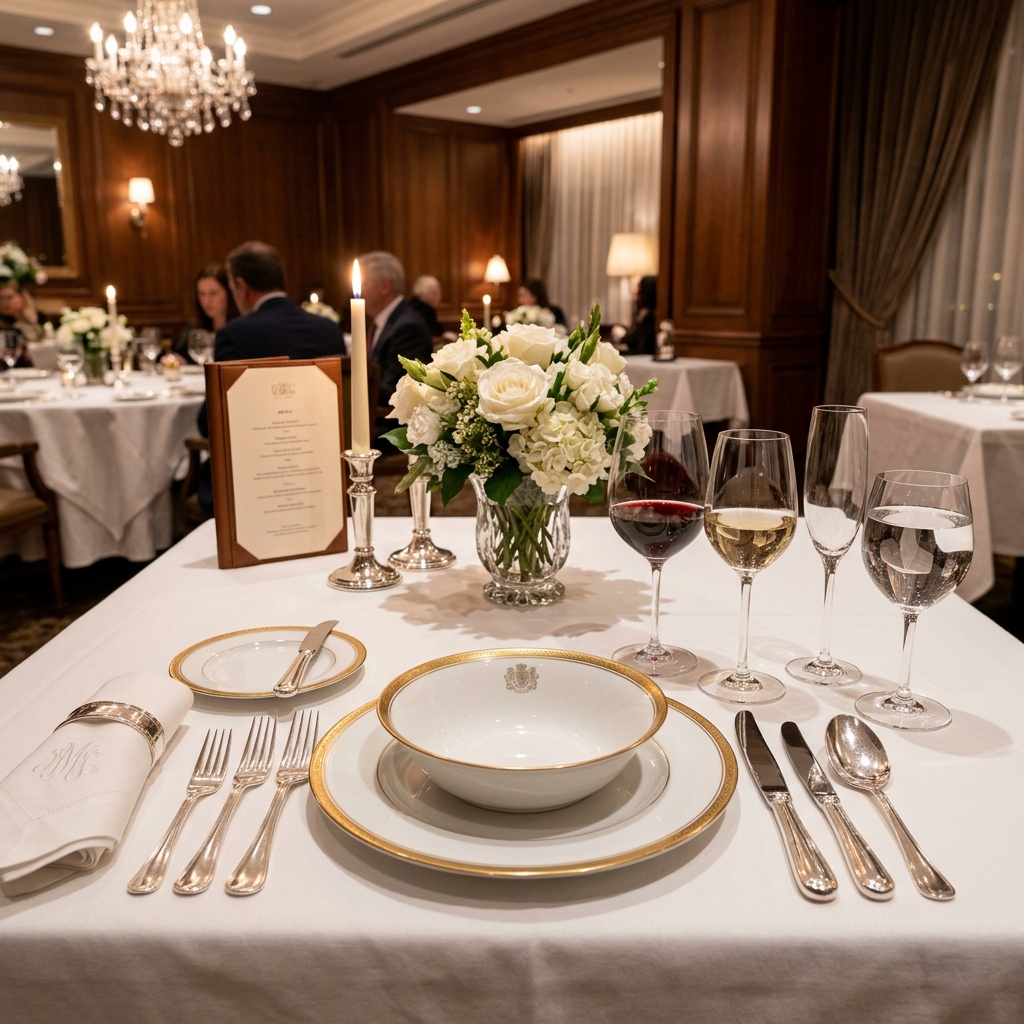
Picture this: you are seated at a beautiful, dimly-lit table in a highly regarded formal restaurant. The atmosphere is immaculate, the company is engaging, and then you look down. Surrounding your plate is an intimidating array of silverware—three forks to the left, two knives and a spoon to the right, and another tiny set of utensils hovering ominously above your plate. Many people associate fine dining etiquette with stuffiness, rigid rules, and the fear of making a mistake. In reality, true etiquette is simply about making others around you feel comfortable. By mastering the fundamentals of dining etiquette, you eliminate the anxiety of 'which fork to use,' allowing you to focus entirely on the delicious food and the wonderful company. This comprehensive guide will demystify every aspect of dining etiquette—from navigating complex place settings and napkin protocols to the most crucial element of all: interacting gracefully with service staff.
The Golden Rule: Navigating the Place Setting
When confronted with a formal place setting, the single most important rule to remember is the 'outside-in' rule. As each course is served, you simply use the utensils positioned farthest from your plate and work your way inward.
For example, if your first course is a salad, you will use the small fork on the far left. When the main course arrives, you will use the larger dinner fork closest to the plate. The same applies to the right side: the outermost spoon is typically for soup, the middle knife for a starter or fish course, and the innermost knife for your main entree. The blades of the knives should always be facing inward toward your plate.
Remember “BMW” – Bread, Meal, Water
Another common source of confusion at crowded tables is identifying which bread plate and which water glass belongs to you. To solve this instantly, just remember the acronym 'BMW': Bread on the left, Meal in the middle, and Water on the right.
A quick physical trick to remember this is to touch the tips of your index fingers to your thumbs. Your left hand forms a lowercase 'b' (for bread), and your right hand forms a lowercase 'd' (for drinks). Always use your left hand to reach for your bread, and your right hand for your beverages.
What About the Dessert Utensils?
You may notice a small fork and spoon resting horizontally above your main dinner plate. These are your dessert utensils. During a formal service, the waitstaff will usually slide these down to the sides of your plate just before the dessert course is served. If they do not, you may pull them down yourself when dessert arrives—the fork goes to the left, and the spoon to the right. Pro tip: If you ever find yourself unsure of what to do, simply pause and watch your host. The host sets the pace and the protocol for the evening.
The Napkin Protocol – More Than Just a Lap Cover
The napkin is your primary tool for dining cleanly, and there is a very specific protocol for its use. The moment you sit down at the table, unfold your napkin and place it on your lap. If it is a large dinner napkin, fold it in half with the crease facing toward your waist. You should use the inside of the fold to gently dab your mouth, keeping the visible outside of the napkin clean.
If You Leave the Table During the Meal
If you need to excuse yourself to use the restroom or take an urgent phone call, simply pinch the center of your napkin, lift it, and lay it loosely folded on the seat of your chair. This signals to the waitstaff that you will be returning and that they should not clear your plate. Never place a soiled napkin on the table while people are still eating.
At the End of the Meal
Only when the meal is completely finished and the host has signaled the end of the evening should you place your napkin back on the table. Lay it loosely to the left of your plate. Never crumple it up or place it on top of your dirty plate.
Bonus tip: What should you do if you drop your napkin on the floor? Do not dive under the table to retrieve it. Simply catch the eye of your server and politely ask for a fresh one.
Interacting with Service Staff – The True Mark of Good Manners
While knowing which fork to use is important, the true mark of a refined diner is how they treat the service staff. Respect is the ultimate etiquette. Always make eye contact when ordering, speak clearly, and remember to say 'please' and 'thank you'. It is absolutely unacceptable to snap your fingers, whistle, or yell across the dining room to get a server's attention. A subtle nod or raised index finger as they walk by is all that is necessary.
Handling Food Issues Gracefully
Mistakes happen even in the finest restaurants. If your steak is overcooked or a dish arrives cold, do not make a scene or suffer in silence. Catch your server's attention and politely state the issue. Phrase it gently: 'Excuse me, I am afraid this steak is a bit more well-done than I requested. Could we possibly have it remade?' A professional restaurant will happily correct the error. Raising your voice or being condescending only ruins the atmosphere for everyone.
Tipping and Gratitude
In the United States, standard tipping for good service ranges from 15% to 20%. For exceptional fine-dining service, 20% to 25% is increasingly the norm. Adjust downward only for genuinely poor service, but remember that food quality issues are the kitchen's fault, not the server's. Additionally, acknowledging good service verbally—thanking the server for their excellent recommendations or attentiveness—goes a very long way.
Bonus: Tricky Situations Made Simple
What if I don’t like a dish?
If you are served something you strongly dislike or cannot eat, do not make a fuss. Take a small, polite bite if possible, or simply move the food around on your plate. If the host asks, you can gently say, 'It is beautifully prepared, but I am quite full,' or simply steer the conversation to a new topic.
How to handle a spill
If you knock over a water glass or drop a piece of food, do not panic. Apologize briefly to your tablemates, use your napkin to stop the immediate spread if necessary, and quietly signal a server for assistance. Do not attempt a massive cleanup operation yourself; the staff is equipped to handle it swiftly and discreetly.
Eating difficult foods
For tricky foods like spaghetti, use your fork to twirl a small amount against the side of your plate (or a spoon, if provided). Never slurp. For soup, spoon it away from you, and sip from the side of the spoon rather than inserting the entire spoon into your mouth.
Allergies and dietary restrictions
If you have severe allergies or dietary restrictions, inform the host or the restaurant when you make the reservation. Do not wait until you are seated at the table to list a series of complex demands, as this puts the kitchen in a difficult position and disrupts the flow of the dinner party.
Explore More
About the Author
Sarah is a culinary historian who spends her time tracing the origins of classic American comfort food and diner culture.