Disclosure: Top Local Diner is reader-supported. When you buy through links on our site, we may earn an affiliate commission. Learn more.
The very thought of hosting a dinner party is enough to send a shiver of anxiety down the spine of even the most capable home cooks. Questions begin to spiral: Will the food be ready on time? Will the guests mingle well? What if the soufflé collapses? The truth is, the secret to a magical dinner party has very little to do with culinary perfection and everything to do with meticulous preparation. When you have a solid plan in place, you transform from a frantic cook trapped in the kitchen into a relaxed, gracious host holding court in the dining room. By mastering three foundational pillars—menu design, timeline creation, and atmospheric ambiance—you can host a flawless evening that both you and your guests will genuinely enjoy.
Designing the Menu – Balance Is Everything
The most common mistake new hosts make is treating a dinner party like an audition for a Michelin star. Never, under any circumstances, test a new or highly complex recipe on the night of your party. Stick strictly to dishes you have successfully prepared before and know inside out.
Balance Active vs. Passive Cooking
A well-designed menu balances active cooking with passive preparation. If your main course requires intense, last-minute stovetop work (like searing scallops or stirring a delicate risotto), you must opt for appetizers and desserts that can be made entirely in advance. Think chilled gazpachos, beautiful antipasti platters, or no-bake tartes. You should never have more than one dish that requires your attention right before serving.
Dietary Inclusivity
In today’s culinary landscape, dietary restrictions are the norm, not the exception. Always aim to have at least one substantial vegetarian, vegan, or gluten-free option built into your spread, or ask your guests well in advance about their specific needs. Labeling dishes clearly on small place cards can also save your guests the anxiety of having to ask.
Portion Planning
Calculating quantities can be tricky. As a general rule of thumb, plan for 1.5 servings per person for a multi-course meal. It is always better to have leftover protein than to leave your guests hungry.
The Master Timeline – Work Backwards
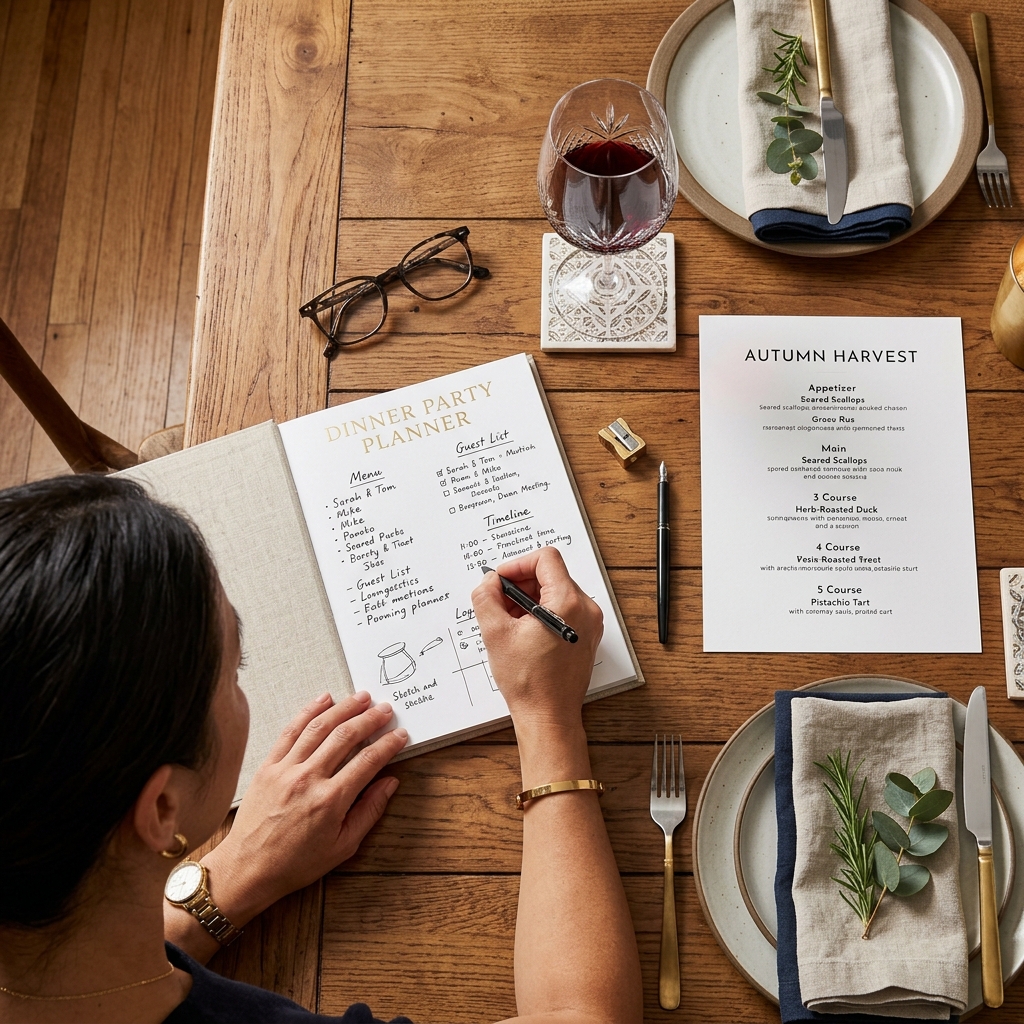
A successful dinner party is won or lost in the days leading up to it. Create a master countdown schedule by working backward from the exact moment your first guest is expected to ring the doorbell.
Create a Countdown Schedule
- Two days before: Execute all your grocery shopping. Wash and prep any non-perishable ingredients. Ensure you have enough clean plates, glassware, and serving utensils.
- One day before: This is your heavy prep day. Chop your vegetables, marinate your proteins, prepare any salad dressings, and physically set the dining table. Doing this the night before removes a massive psychological burden on the day of the event.
- Morning of: Complete any final baking or assemble cold dishes that need to chill in the fridge.
- 2–3 hours before: Start cooking items that require long braising or roasting times. Set out your room-temperature serving platters.
- 1 hour before: Stop cooking. Go get dressed, light the candles, start your playlist, and pour yourself a glass of wine. You should be completely ready when the bell rings.
The “Mise en Place” Mindset
Adopt the professional kitchen philosophy of 'mise en place'—having everything in its place. Before you start cooking any dish, have all ingredients measured, chopped, and arranged in small bowls. This prevents mid-cooking panic searches for the cumin.
Buffer Time
Always build 15-minute cushions into your timeline. Meat needs to rest, potatoes take longer to boil than you think, and the oven might not preheat as fast as you'd like. Buffer time absorbs these shocks.
Setting the Ambiance – It’s Not Just About Food
You can serve the most exquisite meal in the world, but if the room is harshly lit and silent, the party will fall flat. Ambiance is the invisible thread that ties the evening together.
Curate the Perfect Playlist
Music sets the tempo of the evening. Choose a playlist that acts as background music—it should fill the silences without drowning out the conversation. Prepare at least 3 to 4 hours of music to ensure it doesn't loop awkwardly in the middle of dessert.
Lighting and Temperature
Turn off your bright overhead lights. Rely entirely on table lamps, floor lamps, and candles to create a warm, inviting glow. Furthermore, before guests arrive, set your thermostat a few degrees cooler than you normally would. A room full of bodies, combined with a hot stove, will raise the temperature significantly. It is easier to warm up a cool room than to cool down a stuffy one.
Scent and Fresh Air
Be very careful with scents. Light a subtle, welcoming candle in the entryway, but ensure any candles on the dining table are completely unscented so they do not interfere with the aroma of the food. Opening a window for ten minutes before guests arrive can also brilliantly freshen the air in the house.
Guest Management – The Human Element
The Perfect Guest List
Curating the guest list is an art form. Try to mix personalities—combine good listeners with great storytellers. Avoid inviting cliques that might inadvertently exclude others at the table.
Welcome Drinks and Appetizers
The moment a guest walks in, offer them a drink. Having a signature cocktail or a prepared non-alcoholic welcome drink immediately puts people at ease and gives them something to hold while they mingle. Have small, easy-to-eat appetizers available immediately so no one is standing around hungry.
Handling Late Arrivals
If someone is running significantly late, do not hold the rest of the party hostage. Wait a polite 15-20 minutes, then proceed with the appetizers and the first course. Stay calm; the latecomer can join in whenever they arrive.
After the Party – Clean-Up Strategy
Enlist Help (Gracefully)
When the meal is over, if close friends offer to help clear the plates, graciously accept. Do not attempt to wash every pot and pan while your guests are still there, but getting the dirty dishes out of sight and into the kitchen allows everyone to relax over coffee and dessert.
Leftovers Management
Have some inexpensive takeaway containers ready. Sending guests home with a slice of leftover cake or a portion of the main dish is a wonderful final touch to a memorable evening.
Explore More
About the Author
Sarah is a culinary historian who spends her time tracing the origins of classic American comfort food and diner culture.