Disclosure: Top Local Diner is reader-supported. When you buy through links on our site, we may earn an affiliate commission. Learn more.
There is perhaps no food more fundamentally American than the regional sandwich. Born out of necessity, immigrant ingenuity, and the rapid pace of industrial life, the sandwich evolved from a simple lunchbox staple into a localized culinary emblem. In this guide, we explore the stories behind three of the most legendary sandwiches in the nation and point you to our definitive recipes so you can experience them authentically at home.
The Undisputed King of Pennsylvania: The Philly Cheesesteak
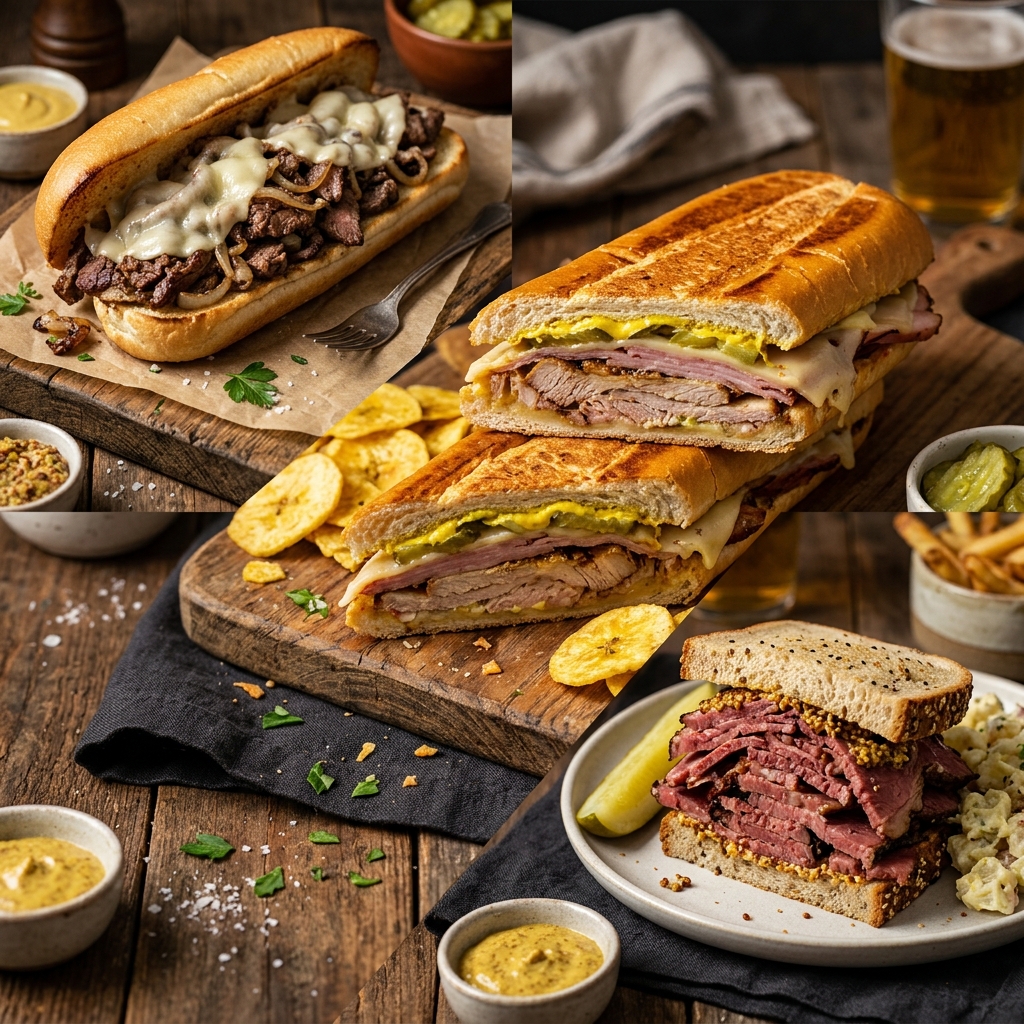
When Pat Olivieri famously threw some chopped beef from his hot dog stand onto a grill in South Philadelphia in the 1930s, he inadvertently created an empire. The Philly Cheesesteak is a masterclass in savory simplicity: thinly sliced ribeye steak, caramelized onions, and melted cheese (provola, American, or the iconic Cheez Whiz) stuffed into a crusty, slightly chewy Amoroso roll.
What makes a cheesesteak authentic isn't just the meat; it is the bread. The specific water composition in the Philadelphia area is often credited with giving the rolls their unique texture. If you want to recreate this legendary sandwich without traveling to the City of Brotherly Love, you need to master the exact ratio of meat to cheese.
Ready to cook? Get our definitive, Classic Philly Cheesesteak Recipe here.
A Taste of Havana in Florida: The Miami Cuban Sandwich
The Cuban sandwich, or Cubano, is a testament to the immigrant populations that shaped Florida's culinary landscape. Originally created in cafes catering to Cuban workers in Key West and Ybor City (Tampa), the sandwich later exploded in popularity across Miami. It features a precise layering of sweet ham, roasted mojo pork, Swiss cheese, pickles, and yellow mustard, all pressed flat and toasted to golden perfection.
A true Miami Cubano uses crusty Cuban bread made with a touch of lard, which gives it a distinct shatter-crunch when pressed. The debate between Tampa style (which includes salami) and Miami style (no salami) rages on, but the core essence remains the same: a perfectly balanced, pressed masterpiece.
Want to make it yourself? Learn how with our Classic Miami Cuban Sandwich Recipe.
The Crown Jewel of the Deli: New York Pastrami on Rye
In the late 19th century, Jewish immigrants from Eastern Europe brought their meat preservation techniques to the bustling streets of New York City's Lower East Side. The result was pastrami—a cut of beef navel that is brined, heavily rubbed with coriander and black pepper, smoked, and then steamed until it is melt-in-your-mouth tender.
Piled impossibly high on sharp, seeded rye bread with a smear of spicy brown deli mustard, the New York Pastrami sandwich is an exercise in glorious excess. It is not just a meal; it is an endurance event that honors the city's rich immigrant history.
Craving the deli experience? Follow our step-by-step New York Pastrami on Rye Recipe to bring the magic of the NYC deli to your kitchen.
The Takeaway
A great sandwich is a portable piece of regional history. By understanding where these iconic creations came from, every bite becomes a taste of American culinary heritage.
About the Author
Sarah is a culinary historian who spends her time tracing the origins of classic American comfort food and diner culture.